I love yoga and it this is one simple exercise that I can do with baby. Yoga has a calming effect for babies who suffer with digestive issues or babies who have difficulties falling asleep. I find doing yoga with baby is also a good bonding session.
Place baby on his back on a play mat or bed and sit in front of his feet. Look into his eyes, smile and tell him what you are going to do.
Take one of baby’s feet in each of your hands. Gently push baby’s knees in towards her chest and apply gentle pressure. This is a wind relieving pose (some people believe that colic is due to excess wind in the stomach). Hold briefly and release. Repeat a few times.
Place the soles of his feet together so the knees fall out to the sides. This is reclining cobbler pose. Without moving his hips, circle his legs clockwise, then anti-clockwise.
While doing step 3, you may sing the song “wheels on the bus” as you are moving his legs in a circular motion.
4. Holding both baby’s legs, open and close his legs while singing “doors on the bus go open and shut”.
5. Stretch baby’s legs towards you, pulling and then dropping them gently. Repeat a few times.
6. Place the palm of one hand on the abdomen and move in clockwise direction (for constipation) and anti-clockwise (for diarrhea). Do this while singing lullaby.
Adapted from “Mindful Mama, Happy Baby” book by Maja Pitamic & Susannah Marriott.
If you are feeling fanciful and want a core workout with baby, this are some poses you can try.
bridge poseI have no core strength… hahaor the classic push up with my 4 months old
When all fails, do the easiest child’s pose!
Baby will still enjoy the bonding session with mummy no matter what! 🙂
Baby A is losing fats as he started to be more active. Decided to make more nutritious food aka porridge (lazy mama!) for him instead of just vegetables and fruits purée.
Fish stock is the easiest to make as it does not require long hours of boiling unlike chicken stock.
Ingredients (for about 3 liters stock):
1 medium carrot (peeled and chopped)
1 medium onion (peeled and chopped)
3 to 4 fresh parsley
2 kg fish bones
2-3 honey dates
Slices of ginger
Forgot about the ginger this time! Still turns out well.
Blanch the fish bones
Step 1: Blanch the fish bones (pour hot water over the bones, let it sit for 5-10 minutes and pour away the water).
Step 2: Bring a pot of water to boil. Add all the ingredients to the boiling water. Boil for about 45 minutes.
Step 3: Allow the stock to cool. Sieve the fish stock to remove any fine bones. Store the fish stock in tupperware containers.
Can see the rich fish oil. Once cooled, it became jelly-like.
Some recipes call for sauteing the fish bones before boiling to remove the fishy taste. I find there is little difference in the taste but lots of difference when it comes to time spent and washing the pots LOL. So I do not sauté the bones anymore.
I usually freeze using ice cube trays so that I can have defrost small portion for baby porridge. Can keep for 3 days in fridge and 3 months in freezer. However I can usually finish the stock in a week. Baby likes porridge made with fish stock as it is very fragrant! Mama is also very happy knowing that all the good collagen and nutrients are in the porridge even if I did not add any meat.
Breastfeeding, in my experience, was most challenging for first time mum. I struggled with low supply and only recently managed to meet my LO’s demand. I didn’t do much research during pregnancy and wished I had known certain things earlier.
Although breastfeeding was very challenging in my initial weeks, the good news is, if you persevere on, you are likely to see the light at the end of the tunnel. It gets easier to latch on, milk supply stabilises and I enjoy breastfeeding so much that I ditch the bottles when I’m travelling with baby. I hope my sharing can encourage other low supply mums.
MY MISTAKES
1. Small breasts = low milk
I didn’t expect myself to have much milk as I have small breasts. Hence I did not invest in a hospital grade pump. I should have bought Spectra S1 right from the start!
2. Never insist on skin to skin and breastfeeding in hospital
I didn’t have a good experience with Mt Alvernia. I was too drowsy from epidural so forgot to ask for skin to skin contact. On hindsight, shouldn’t the nurses be the one who offer skin to skin? After I was more awake, my LO was already taken away to NICU as he had infection. The nurses then told me that he was hungry and gave me 3 choices, Nan, Enfamil or Similac. As an exhausted and drowsy FTM, I didn’t know better and just go with their flow.
Throughout my stay, they didn’t ask if I wanted to latch. Initially I thought I can’t latch cause my LO was in NICU but then I realised this is not true. By the end of day 2, I started latching. I also saw a pacifier next to my LO so I assumed they gave him pacifier without asking me. Thankfully my LO has no nipple confusion.
In the first month, I could only pump about 60ml each session whereas my LO drank 120ml since week 2. It was quite depressing and I kept reading tips on how to increase supply. I almost resigned to my fate until I spoke to this super encouraging mummy friend whom made me determined to carry on my breastfeeding journey. At my 3rd month, I yield about 200ml and started my frozen milk stocks.
3. Top up formula without pumping
My LO sometimes cried murder after
latching (despite latching for 2hours!) in the first month as I think my milk
either flows too slow or insufficient. I top up formula as it was too stressful
to see him cry. I know there are different stands on this. Some mums believe in no topping
up but personally I was too stressed when insisted on no formula. This caused my supply to drop further.
It is ok to top up, but I should pump with every
formula fed so that my body will be stimulated to produce more.
So what did I do to increase my supply?
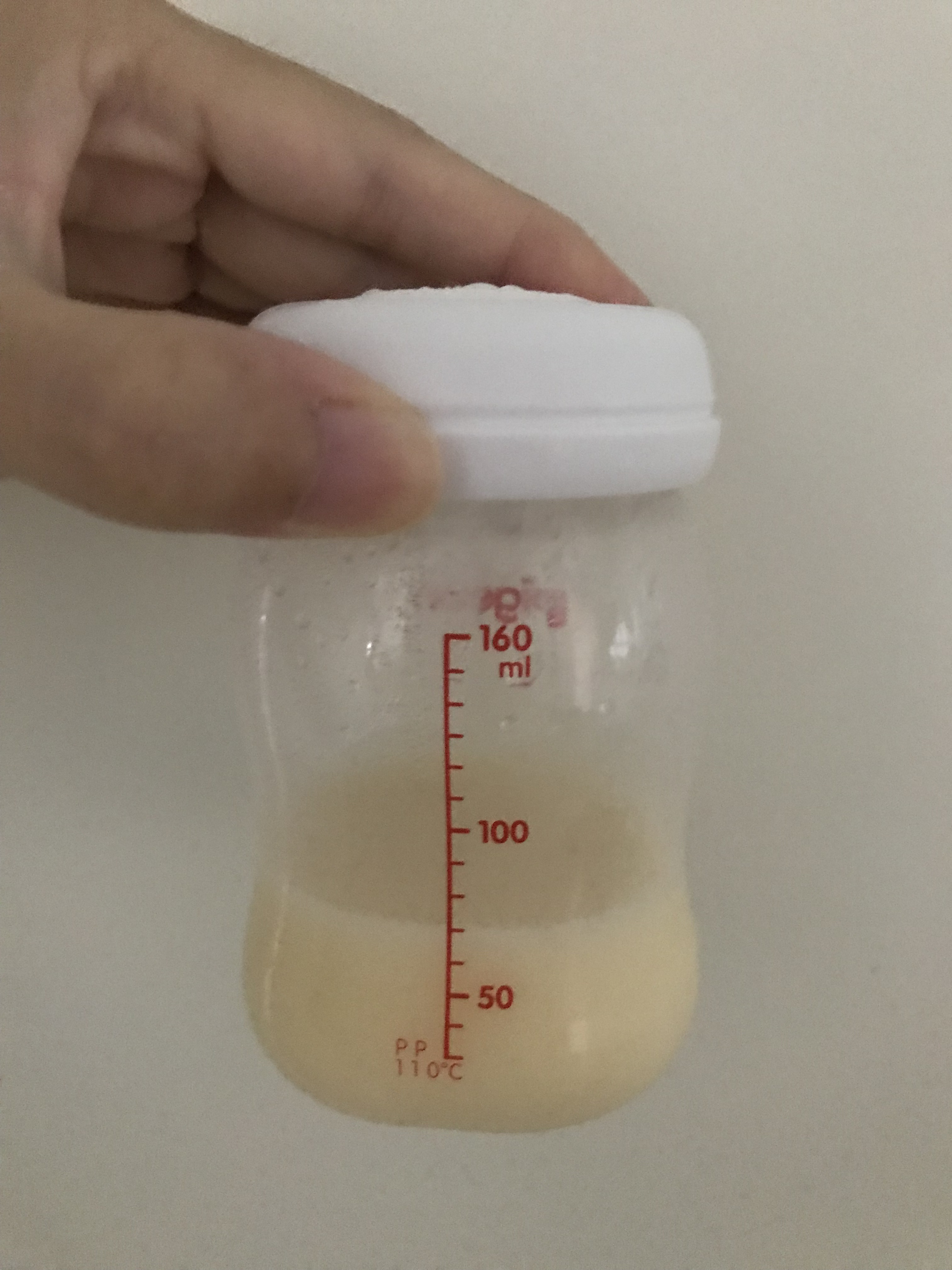
From this (about 60 ml per session)
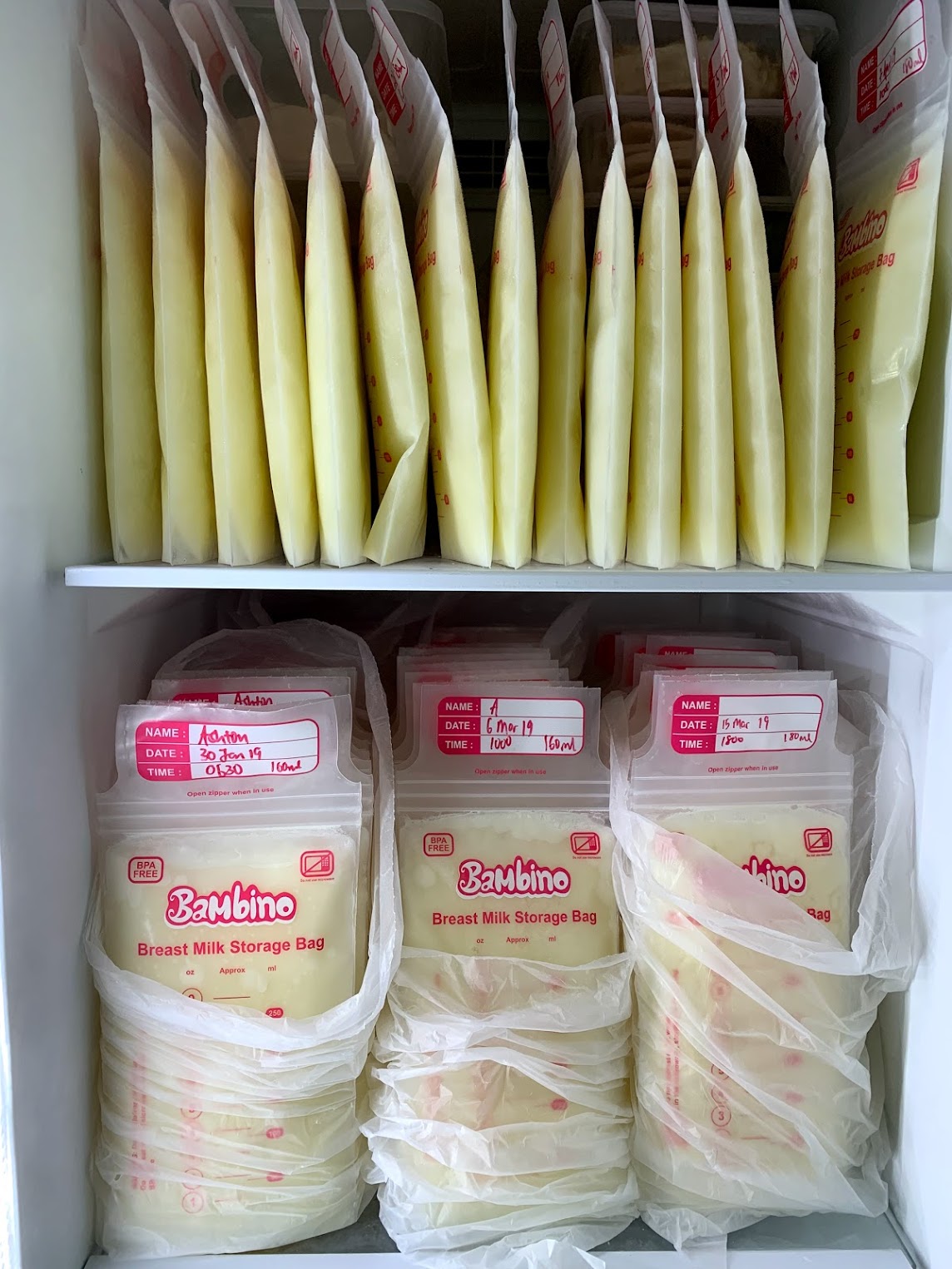
to a freezer full of milk…
TIPS
#1 Latch/pump frequently
This is the most important tip but most difficult to do.
I didn’t know better and was lazy. I skipped some night pumps which resulted in engorgement. Latching and pumping frequently is very important. Only when the breasts are emptied then more milk will come in.
Nowadays I latch on demand in the day (LO latch one side, I use haakaa for the other side), and pump 20-30min after every latch. In addition, I will pump every 2h in the day and 4h in the night.
(Update: some mums asked if I still pump after latching. Yes I do, very tiring but gotta persevere on for the milk supply!)
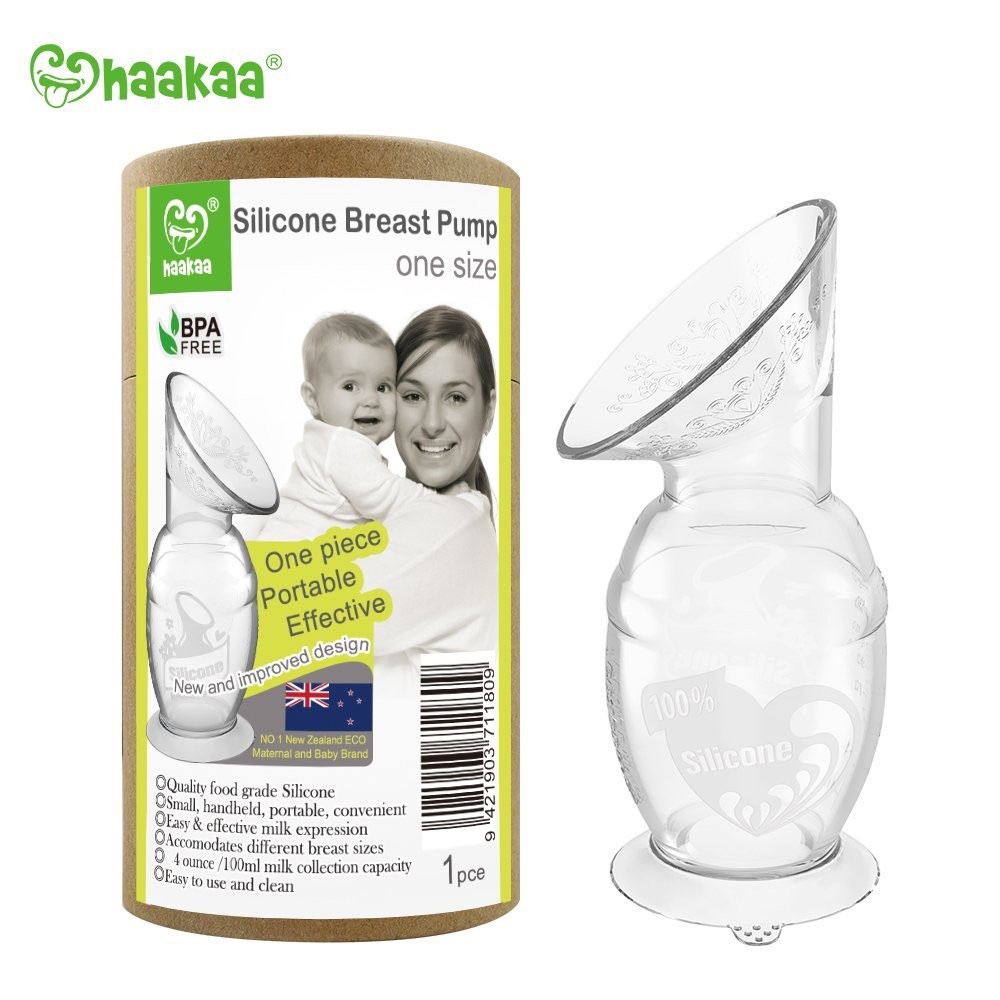
Haakaa as recommended by my wonderful nanny. This allows me to capture letdown from my other boob when LO latches on.
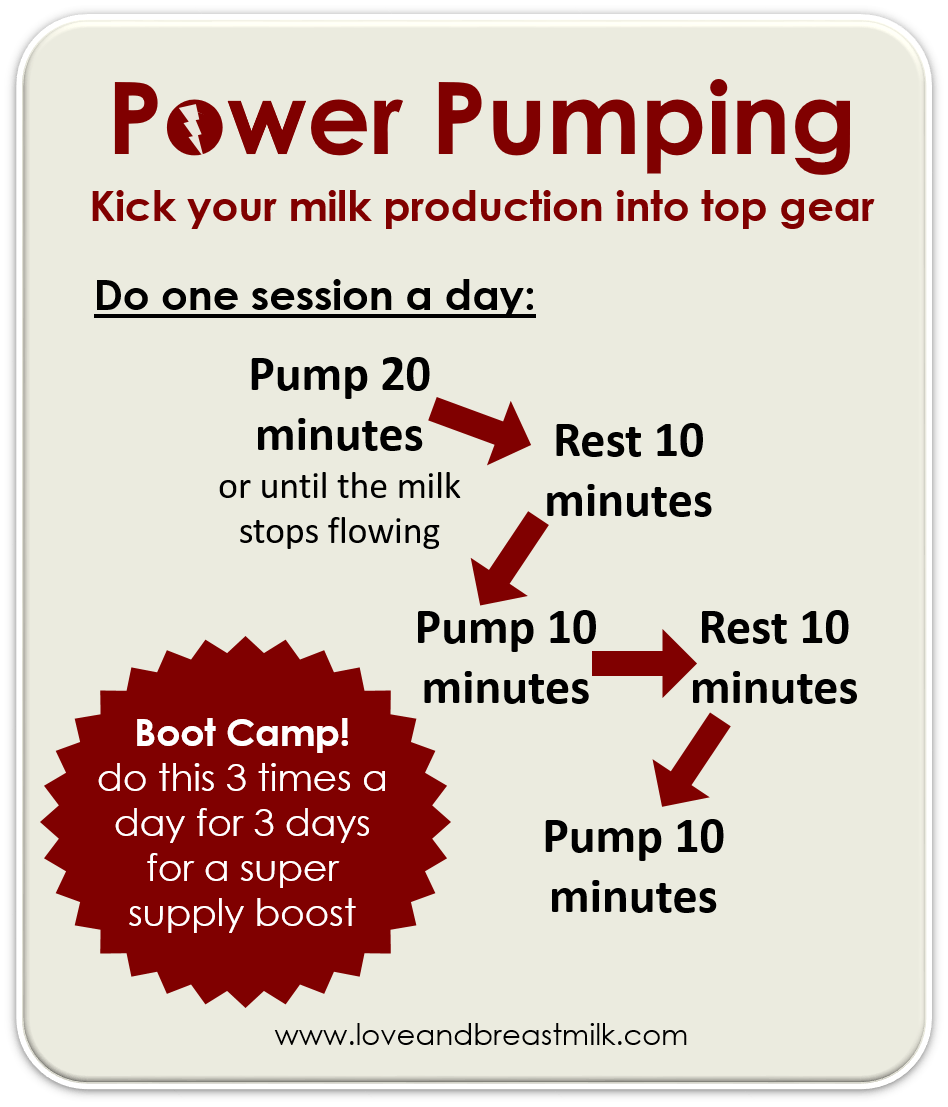
I also do power pump at least once a day. I usually get more supply after power pump.
I stop power pumping after my supply is established. Don’t want to risk having engorgement again.
#2 Massage and warm compress for letdown
The lactation consultant advised to massage and hand express in between pumps. Realised that this is more effective than a 30min straight pump without hand express/massage in between. Hand expression allows me to clear blocked ducts better and also very encouraging to see the milk dripping out when hand expressing. Made me want to work harder!
Massage 1 min –> Pump 10 min –> Hand express 2 min
–> Pump 10 min –> Hand express 2 min
Can vary duration depending on individual’s preference.
#3 Drink more fluids
I don’t know how much is enough but I drink one cup of water before and after pump to replenish the lost fluid. My body also feels healthier with more water intake anyway.
Green papaya fish soup, lactation tea and bubble milk tea seem to work well for me. My confinement nanny was very supportive and encouraging and made lots of soups for me.
I drink this brand.
#4 Diet
I ate oats with milk for breakfast daily but stopped after my supply is established. Oatmeal is a galactagogue (substance that promotes lactation) and also a traditional way to increase milk supply.
Other than a balanced diet with fruits and vegetables, I still try to eat steam fish daily. I’m also a sashimi lover and realised I can pump a lot more after a bowl of chirashidon. 😍😍😍 Another perfect excuse to indulge in my favourite food.
Lactation cookies and cupcakes didn’t work well for me so I gave up on that as they are costly anyway (they also use oats as part of the ingredients).
#5 Supplement
Fenugreek seems to work very well for me. Not sure if it’s a combination of the above or due to fenugreek, my supply gradually increased after starting fenugreek supplement. I’m still eating 3 times a day, 2 pills each time. I’m taking the GNC brand. My mother-in-law has been very supportive and will stock up fenugreek for me.
GNC Fenugreek
#6 Suitable flange size
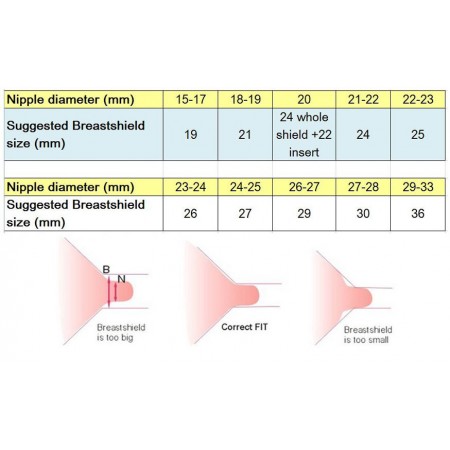
This is very important but neglected by many. The standard flange size (28mm) provided by Spectra is too big for me. Pumping feels more comfortable and resulted in more yield when I got the suitable size from Maymom. Read how to check for correct flange size here.
Image credit: pupsik studio
#7 Rest
I can pump more after a good afternoon nap.
#8 Don’t stress
I get stressed initially when I see others post picture of their freezer full of milk and wonder how come I can’t build a fridge supply and instead need to top up formula?
It was when I decided to stop comparing, change my mentality to “fed is best, not breast is best” and “feed my baby, not the fridge”, I feel more at ease and supply gradually builds up.
#9 Have determination, patience and faith but don’t self-blame
It takes time but I believe that my supply will increase eventually. But if I cannot meet his demand even after doing so, it’s alright as I know I have done my best. Some people are just not so lucky in breastfeeding while some people really have it easy without putting in much effort. My supply only comes in at day 3 (a pathetic 0.5ml after hand expressing for an hour) while my friend can pump 300ml in a session in her first week! 😆
It took me 2 months to match his demand and 3 months to finally have some extra milk to freeze. In the process dealt with engorgement, blocked ducts and inflammation. However I feel so satisfied when I see my LO happily drinking my milk filled with antibodies!
Light at the end of tunnel…
From hating breastfeeding to loving it so much now. It not only gives antibodies to baby but also saves money and is super convenient. In my recent trip to Japan, I didn’t bring any bottles nor pump. I latch on the go and all I need was a nursing cover! Baby hungry? Latch. Baby tired but can’t sleep? Latch. Baby cranky? Latch! Best solution for every baby issue I face!
If you are still reading this post, good job mummy! You are determined to do something about your supply and have the perseverance to read so long! You can do it for breastfeeding too!
Baby is 6 months old! So we have just started solids and looking back, I realised I really did not buy a lot of baby products. And I am glad this way as I really hate clutters.
Since there are so many baby
products out there, one may get very confused as a first-time parent. We may
also get sink into the marketing gimmicks due to our excitement. So I hope this
sharing helps!
These are the 5 best products that I purchased so far (1 being the best).
1. Soul AnoonA Carrier
A carrier is a must-have as it gives me the mobility (a pram can be too troublesome in crowded places) and also a solution to cranky baby. On days when he is so cranky, I babywear him and do housework at the same time. He can sleep well in it too.
Magic spell to make baby sleep!
I wanted a carrier that can fit newborn without insert (with insert means hotter!), hence was deciding between a Tula Free to Grow, Ergo Omni 360 or this Soul AnoonA carrier. I wanted a carrier instead of a sling as carrier allows even weight distribution on both shoulders. Decided to get AnoonA as it is the cheapest (got it at $169) and the material feels the most cooling. Indeed, my baby loves the AnoonA.
2. Spectra S1 Breast Pump
Why did I not buy this right from the start?! A good hospital grade pump is a must-have for all breastfeeding mums! I used a portable Spectra S9+ pump for the first month of breastfeeding and it is not as good. I cannot control the cycle (frequency of pump), and it is also noisier.
Did not consider Medela as
many mummy friends told me Spectra works better. Besides, Medela is really
expensive. I get this Spectra for only $110 online! Medela is like $700+!
I like that this S1 has long
battery life. I pump very frequently and it can last me for a few days before I
need to charge. It also has lights which is really good when I pump at night.
The downside is that it is quite bulky and heavy. But it is ok since I’m usually at home for the first few months to build my milk supply (and I use S9+ when I’m on the go).
3. Love to Dream Swaddle
I firmly believe that this swaddle helps my baby to sleep better and also trained him to sleep through the night. After we started wearing this swaddle for him, he managed to sleep from 12.30 am to 7 am at 2 months old.
Looks quite poor thing in picture but he can really sleep well with it!
He didn’t like the normal cloth swaddle and will struggle to free his arms. This swaddle can fix his startle reflex and keep his arms in.
It is very expensive at about $40 but I would pay to buy longer sleep.
4. Sophie the Giraffe Teether
I don’t think I would buy this given the high cost for just a toy ($39.90) but A really loves this. I gave all his baby shower gifts but he only plays with this (at 1.5 months old). This has been his favourite ever since. I guess the giraffe spots attracts him and the long slender neck and legs made it easy for his little fingers to grab. Also, the long legs can reach into his inner gum, which is soothing during teething. He chews on it so much that the colours faded.
Tried giving him different teethers but this is still his favourite so far. He can self-entertain with this teether toy for the whole day (before he starts to crawl and explore the house). Never get bored of it. $39.90 to buy me a few hours a day? Awesome. It claims to be made of au natural rubber and safe food dye, though there was this article on mould growing inside the giraffe. Since it is an expensive toy and baby loves it so much, I couldn’t bear to cut to check if there is mould. I will just be extra careful and not let water sips into the hole.
5. Bouncer
This is not exactly a
purchase as I (yes me!) have used it when I was a baby and my parents still
kept it.
Traditional simple bouncer with just a mesh and spring.
This bouncer is really a life saver during the first 3 months when baby likes to be bounced to sleep (I thought he was too young to sleep train then). Since he could not have tummy time too long when he was so young, the bouncer was his seat as I didn’t want to let him lie flat all the time in case of flat head. He loves to be seated on the bouncer as he can see things at a different eye level. Note that it is not safe to use bouncer once baby learns to flip (even with the seat belt on).
Can see how much we used the bouncer by the amount of repair work we had…
Enjoying his swaddle and bouncer
And now for the 2 worse products that I purchased so far (1 being the worst).
1. Philips Steam Steriliser
Both the husband and I agree on this! Because it leaks water almost every time we sterilise the bottles! It made our counter top so wet and leave water stains! As if having a baby is not tiring enough, we have to keep wiping the counter top.
2. Pigeon Baby oil
I thought oil is necessary for baby massage but after a few episodes of eczema flare up, I have stopped using the oil and used baby creams for massage instead. I also later realised that it contains mineral oil, which may clog pores and cannot truly moisturise the skin.
When we were discharged from the hospital, the husband wanted to have the vaccinations done with the pediatrician for convenience. The price was few hundred dollars for each jab and thankfully my friend recommended me the fuss-free and mostly free of charge vaccinations in polyclinic.
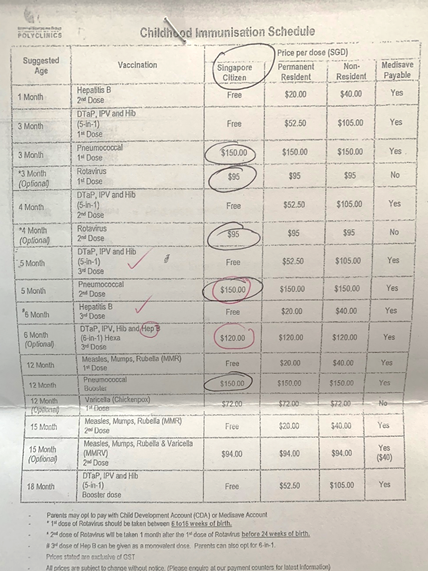
Polyclinic vaccinations are awesome. The vaccinations are heavily subsidised if you are a citizen or Permanent Resident. Many jabs are free and for those that are not free, most can be paid by medisave or CDA.
Some of the vaccinations are optional, but I decided to take all for my baby as I do not want to take any risk of him falling sick.
Contrary to what some may think, the wait time is short as if I’m not wrong, appointment is a must. You just need to call the hotline for the first jab. and subsequently they will make appointments with you during payment.
For the first appointment, do
bring along the child’s birth certificate (for registration) and health
booklet. For subsequent appointments, just bring the health booklet will do.
It usually takes us a total of 40 min for the vaccination and growth development assessment by nurse and consultation with doctor. If there is no consultation with the doctor, we can get everything done in less than 30 min. The nurses are also very experienced and A only cried for like 5 seconds every time he had a jab.
For certain months like 1 month old and 3 months old, consultation with doctor is free as it is part of the growth assessment but if I want to see the doctor due to my personal concerns (at 6 months old), I only paid $6.80 for the consultation, which can be paid using the CDA account.
I skipped the 5 in 1
vaccination (free of charge) at 5 months old and took the 6 in 1 vaccination
($120) at 6 months old instead. I have to pay $120 (payable by medisave) extra
but decided this option for convenience and also one less jab for my baby.
So far at 6 months old, my baby has not fallen sick (touch wood!) and has no fever after the vaccinations. The polyclinic is also very kind to give free baby paracetamol to standby for potential fever.
Looking like a Shaolin monk after the shave…
Appointment Hotlines
National Healthcare Group Polyclinic: 6355 3000 Singhealth Polyclinic: 6643 6969













 mamakeng.com